How to Identify Hidden Entry Points in Your Escondido Roofline
Rodents enter Escondido attics through small, overlooked gaps in the roofline. Most openings sit behind trim, under shingles, at eave returns, or inside vent assemblies. The entry points look unimportant from the ground. At night, scurrying sounds expose the truth. A roof rat can pass through a hole the size of a quarter. Once inside, it nests, soils insulation, and follows urine pheromone trails across rafters and duct runs. In North County homes near canyons and creek beds, these routes are common. They connect native habitat with roof structures and soffit vents.
This article shows where the gaps hide, how to confirm activity, and which materials hold up in Escondido’s climate. It focuses on rodent proofing that actually blocks access, not just trapping. It includes field notes from projects near Lake Hodges, Daley Ranch, and the Escondido Creek watershed. It uses clear language so homeowners can make sound choices and avoid repeat infestations.
Why roofline gaps in Escondido draw rodents
The Escondido roofline sits at a collision point between wildlife movement and human shelter. Local chaparral and canyon edges push rodents to siding lines and overhangs. Nights with onshore breeze raise scent plumes from attic voids. That scent mixes with food odors that vent through roof and soffit. Roof rats travel along power lines, fences, and palm skirts, then climb to fascia boards and gable peaks. Small cracks in flashing or loose roof vent screens provide instant access.
Neighborhoods close to Lake Hodges, Hidden Meadows, Daley Ranch, and Escondido Creek feel higher pressure. The migration routes run along stream corridors and utility lines toward Old Escondido, Jesmond Dene, Eureka Meadows, Harmony Grove, Felicita Park, and Lomas Del Lago. Through the 92025, 92026, 92027, and 92029 zones, the same pattern repeats. Rats test the same weak points after each heat wave or light rain. A single unsecured eave gap can support a colony within a week.
The roofline anatomy: where hidden entry points hide
Gaps hide in predictable locations. Each area should be inspected at arm’s length, then sealed with durable materials. Thin plastic mesh and generic foam fail under chewing. Stronger barriers protect the building and do not rely on pesticides. The primary focus is exclusion at the roof edge and penetration points. In practice, these locations show the highest yield in Escondido:
1. Eave gaps at rafter tails and bird blocks
Many houses have vented bird blocks at eaves. The wood shrinks over time. Paint peels and small cracks form along the top edge. A rat uses the seam to pry and enlarge the hole. If a soffit uses decorative corbels, the void above the corbel often stays open. Look for shadow lines and dust halos around the vent holes. Smudged areas or small rub marks signal rodent hair oil. A flashlight beam across the grain helps the eye pick up hairline openings.
Proper rodent proofing uses 1/4-inch galvanized hardware cloth installed behind the vent pattern and secured to framing with exterior-grade screws and washers. The screen must sit tight to the wood. Loose edges create chewing points. Attic Guard teams in Escondido secure these screens and then seal the wood gaps with paintable sealant that bonds under heat. They avoid thin plastic that sags in summer.
2. Roof vent screens and attic fan housings
Roof vents sit along ridge lines or as low-profile pods. Factory screens bend under pressure and rust in coastal air. Wind carries leaf litter under the vent hood and hides damage. A rat taking shelter under the hood can push through a weak screen in minutes. Powered attic fan housings age as well. The blade opening and louvers can deform.
A strong fix involves cutting 1/4-inch galvanized hardware cloth to cover the vent opening from the exterior and securing it under the hood with metal screws and fender washers. This keeps air flow while blocking entry. Where the roof pitch is steep, a roofer’s harness is advised. Attic Guard secures all roof vent screens with 1/4-inch galvanized hardware cloth to prevent roof rats from entering the attic. This small upgrade stops the most common breach in 92026 slope-roofed homes and reduces long-term service calls.
3. Gable vents and decorative louvers
Gable vents give easy access if a screen is missing or weak. Decorative louvers at peaks often hide open voids behind trim. A careful look from a ladder reveals bite marks at the wood louver edges. Fecal pellets may collect in the corner of the sill. Chew damage around screen staples also appears along the bottom run where rain softens the wood.
The upgrade is similar to roof vents. A rigid frame with 1/4-inch galvanization sits behind the louver. It resists chewing while preserving attic ventilation. Paint the frame to reduce reflectivity. Where a louver is ornamental, block the interior opening and add a screened, code-compliant vent nearby to maintain attic air changes.
4. Flashing transitions at headwalls and sidewalls
Where a roof meets a wall, the metal flashing can lift. Heat cycles and stucco cracks open a path beneath shingles. Rodents often find these edges with little resistance. A slight lift in the metal leaves a dark slit. From the ground, it looks like a shadow line only. At night, scurrying sounds confirm the breach.
The fix uses metal re-termination with new flashing and a continuous bead of exterior-grade sealant at the counterflash. A strip of steel wool can serve as a chew deterrent at a tight step-flash seam, but steel wool should not be the only defense. High-end flashing paired with hardware cloth where airflow is needed outperforms casual patching. Attic Guard uses high-end flashing and steel wool reinforcements that exceed standard hardware store solutions. That approach has held up through hot summers in the 92029 zone.
5. Soffit vents and intake baffles
Soffit vents provide attic intake. Many homes have wide rectangular vents with aged screens. The screen gauge is often too light. Rodents pry the corner, fold the mesh, and climb in. Insulation baffles at the roof deck above the soffit can also create a hidden passage if they are broken.
The correction uses rigid 1/4-inch galvanized hardware cloth behind the vent plate. Screws lock the plate back to framing. Seal the perimeter with weather-resistant caulk. Replace broken baffles so insulation does not block airflow yet leaves no channel for entry. This balance keeps the attic breathing and blocks pests under Escondido’s summer heat loads.
Recognizing the signs before opening the roof
Before climbing, the house will talk. Scurrying sounds in the ceiling at night suggest active travel lanes over joists. In the morning, a driveway check can turn up food caches near downspouts or fence corners. A faint odor near attic hatches hints at urine-soaked insulation. The odor grows stronger on warm days. The HVAC may cycle more because rodent nesting has compromised R-value around ducts and in the attic floor.
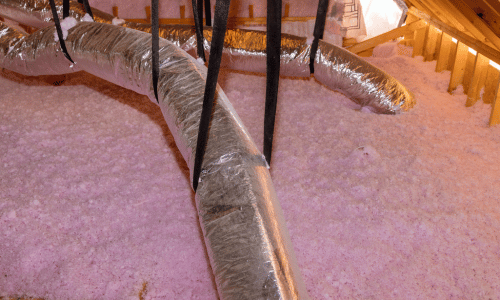
Inside the attic, the signs show clear patterns. Rat droppings accumulate along the top plates and near the water heater flue chase. Trails appear as dark, compressed paths where fur and oil mark wood. Urine pheromone trails map straight lines to nesting pockets. Chewed wires show copper at bends. HVAC duct damage appears as gnaw marks and torn vapor barriers. In Escondido homes with flexible duct, a single breach can spill cooled air into the attic and spike bills in July.
Why repeat infestations happen in North County
Several factors work together. Escondido’s terrain creates natural funnels along Escondido Creek and the Lake Hodges basin. Vegetation near walls gives cover up to fascia boards. Utility lines offer high travel routes that bypass pets and ground traps. Mild winters mean continuous breeding cycles. Food sources include backyard citrus, bird feeders, and open pet food on patios. Once a house has hosted rodents, pheromone trails remain on rafters and insulation. Those trails draw new activity unless removed.
This is why full rodent proofing must include exclusion, decontamination, and insulation restoration where needed. Traps alone provide a short pause. Without sealing eave gaps, soffit vents, roof vent screens, foundation cracks at the perimeter, and pipe penetrations with the right materials, rodents return along the same scent map.
Materials that hold up in Escondido conditions
The right materials stop chewing, resist rust, and stay in place under heat. Thin mesh or soft foam loses shape within a season. A strong program uses a limited set of durable items installed with sound technique. Galvanized hardware cloth at 1/4-inch aperture is the standard for vents and openings. It blocks rats yet keeps airflow for the attic. Exterior-grade screws and fender washers prevent pull-through. For small seams, stainless or galvanized steel wool adds bite resistance, but it should back a more rigid barrier whenever possible.
Expanding foam has a place as a secondary seal around rigid barriers and at non-chew points. It should not stand alone at a primary entry. Weather stripping tightens attic hatch covers and garage access doors, which reduces drafts that can also carry scent. Flashing repairs at headwalls and sidewalls need metal that matches or exceeds the original gauge. In practice, the combination is simple: hardware cloth, steel wool as a deterrent at seams, metal flashing fixes, and paintable exterior sealant to finish.
Inspection method for hidden roofline entry points
A careful inspection follows a loop from ground to eaves to roof penetrations and back to the interior attic. It avoids random climbing and reduces missed gaps. The loop is adjusted to the house style. Tile roofs near Harmony Grove and Hidden Meadows need ladder work at specific valleys and rake edges. Composition shingle roofs in Old Escondido often show issues at roof-to-wall joints and gable vents.
Start at ground level. Note overhanging limbs that allow direct roof access. Look for fence lines near the roof edge. Track routes from palm trees to the eave. Then scan soffit panels, bird blocks, and vent grills from a ladder. Push gently at suspect areas with a probe. A weak panel will flex. On the roof, examine every vent hood and fan housing. Look under shingle courses near flashing for voids. Inside the attic, follow the trails with a headlamp and mark the light leaks from the inside. Those pinpoints show where exterior daylight enters through gaps.
Attic contamination and insulation loss
Rodent activity degrades attic performance fast. Urine-soaked insulation clumps and loses loft. The effective R-value drops. In Escondido’s summer heat, that loss forces the HVAC to run longer. Nesting often buries around can lights and partition walls. Flexible duct runs suffer gnaw marks, which lead to HVAC duct damage and leakage. Chewed wires increase fire risk. Pathogens such as Hantavirus and Salmonellosis can ride dust into living spaces if cleanup is handled without containment.
Safe cleanup uses a controlled process. A crew seals the attic access, runs an industrial air scrubber to capture fine particles, and uses an industrial-grade HEPA vacuum to remove droppings and debris. A ULV cold fogger or a thermal fogger applies disinfectant to neutralize urine pheromone trails and reduce airborne pathogens such as Hantavirus. After decontamination, the team restores insulation with a blower machine for even coverage and correct depth. Products such as TAP Insulation provide pest resistance with borate treatment while adding thermal value. Many Escondido projects also use high-density Knauf or Owens Corning fiberglass where a batt system is preferred.
Local patterns by neighborhood and terrain
Hidden Meadows homes near canyons show high roofline pressure on the windward side. Attic Guard has completed numerous full attic restorations in that community to shield canyon-front properties. Along Lake Hodges, gable vents and soffit grills get frequent testing by roof rats that travel along oak branches and utility lines. In Old Escondido bungalows, aging eave vents and decorative louvers become the weak link. Near Jesmond Dene and Eureka Meadows, longer fence lines let rodents reach two-story eaves by corner posts. Homes around Felicita Park and Lomas Del Lago often need reinforced roof vent screens because of repeated pressure during dry months.
The Escondido Creek watershed heightens rodent migration each season. The company’s proximity to the watershed at 510 Corporate Dr # F allows fast response during peak movement from Daley Ranch down to central Escondido. This local vantage point supports quick material match and consistent follow-through for properties near the California Center for the Arts, San Diego Zoo Safari Park, and Westfield North County Mall. These landmarks sit within known pressure corridors in 92025, 92026, 92027, and 92029.
What a permanent exclusion looks like
A multi-point exclusion closes active and potential entry points with durable materials and sound engineering. It does not rely on bait boxes as the primary defense. Instead, it removes the cause of entry and erases the scent map. Attic Guard’s process follows a strict biosecurity standard used across San Diego County homes.
The crew seals every eave gap, soffit vent, and roof vent screen with rigid hardware cloth. It upgrades flashing where roof planes meet walls. Foundation cracks at the perimeter also get sealed, because rodents can travel up inside wall cavities to the attic. Weather stripping improves door seals that leak air and odor. After the shell is tight, decontamination neutralizes urine and droppings. Insulation replacement restores R-value so the HVAC does not fight a losing battle.
DIY reality check and safety
Some tasks are safe for homeowners. Clearing limbs six to eight feet back from the roof line reduces access. Securing pet food and removing citrus drops cut attractants. Placing fine-mesh screens behind easy-to-reach soffit vents is possible for steady hands on a ladder. However, roof vent screen upgrades, gable louver reinforcement, and headwall flashing work present fall risks. Tile roofs require special footwork to avoid cracked tiles. Disinfection without containment can spread contaminated dust.
For rodent proofing that involves vent screens, roof penetrations, and attic decontamination, a licensed crew with the right tools is the safer route. Professional teams bring harnesses, cut exact hardware cloth frames, and use HEPA vacuums, industrial air scrubbers, and foggers that control bioaerosols. This protects both occupants and the building.
Tools and equipment used on professional Escondido projects
A typical exclusion and restoration in Escondido uses specific gear selected for strength, airflow, and hygiene. The hardware includes 1/4-inch galvanized hardware cloth, exterior screws with fender washers, high-grade sealants, steel wool for seam deterrence, and metal flashing stock. Containment and cleanup rely on HEPA vacuums, an industrial air scrubber to manage fine particulates, a ULV cold fogger or thermal fogger for disinfectant application, and a blower machine for insulation. The setup also includes infrared thermometers to check duct leakage zones and airflow meters to confirm attic ventilation after vent screening.
Material choices matter. TAP Insulation carries borates that deter insects and adds thermal value suited to the microclimates of 92025 through 92029. Knauf and Owens Corning fiberglass products provide reliable R-values where batt formats fit the framing plan. Weather stripping keeps attic hatches tight, and expanding foam, when used in combination with rigid barriers, closes micro gaps that push odor into the eaves. The overall system creates a sealed, clean, and well-ventilated attic.
Symptoms that point to hidden roofline entry points
Escondido homeowners often report specific issues before an inspection. Nighttime scurrying above bedrooms. Light scratching near can lights. A faint ammonia-like odor near hallways with attic access. Higher electric bills in August. Small piles of insulation dust at the edges of recessed fixtures. These details often link to roof vent screen failures or eave gaps.
The presence of rat droppings near the water heater flue or at the top of partition walls points to entry at the ridge or gable vents. Chewed wires near a junction box suggest a path across truss chords to a roof penetration. HVAC duct damage with torn vapor barriers often starts near soffit intakes where rodents gain first access and begin nesting. Urine-soaked insulation clumps under trails, cutting thermal performance and allowing odor to travel along airflow paths. If scurrying sounds at night persist, it often indicates compromised R-value in the insulation due to rodent nesting.
How decontamination protects health
Rodent waste can carry Hantavirus and Salmonellosis. Disturbing it without filtration pushes particles into the home. A safe approach isolates the attic, runs negative air with an industrial air scrubber, and uses an industrial-grade HEPA vacuum to remove droppings. A ULV cold fogger or thermal fogger applies hospital-grade disinfectants to break down urine pheromone trails and reduce pathogen risk. The work follows biosecurity protocols that limit cross-contamination into living spaces. As a CSLB-licensed contractor in San Diego County, Attic Guard adheres to these standards on each project.
Where Escondido rodent pressure is strongest
The pressure peaks along corridors tied to water and vegetation. That includes Escondido Creek, the Lake Hodges basin, and the lower slopes below Daley Ranch. Properties set against open space in Hidden Meadows see frequent roofline testing. Central neighborhoods near the California Center for the Arts mix older wood vents with new construction that has modern soffit intake. Both need attention. Around Westfield North County Mall, dense landscape and food waste attract general rodent movement that then pushes into adjacent subdivisions.
The company’s office at 510 Corporate Dr # F situates crews between 92029 and 92025, close to freeway access for quick service across Escondido, San Marcos, Valley Center, Rancho Bernardo, Poway, Vista, and greater San Diego. This location supports same-week exclusion after inspections in high-pressure seasons.
How Attic Guard approaches rodent proofing in Escondido
Attic Guard focuses on durable exclusion with detailed decontamination and restoration. The process starts with a free attic inspection in 92025 and nearby zip codes, followed by a photo-backed entry-point report. The team documents each eave gap, soffit vent, roof vent screen defect, flashing breach, and foundation crack. The plan specifies hardware cloth sizes, fasteners, and sealants for each repair. It also outlines decontamination steps with HEPA vacuuming and fogging, and the insulation strategy using TAP Insulation or fiberglass options from Knauf or Owens Corning.
The company uses pheromone blocking technology during cleanup to collapse scent trails. After sealing, the crew performs a quality check from inside the attic. Any daylight points are sealed. Roof vents are tug-tested. Gable screens are tapped for rigidity. The team avoids quick foam-only patches and does not rely on bait as a long-term fix. This method reduces callbacks and supports a lifetime exclusion warranty on sealed entry points.
How this differs from general pest control
Traditional pest control firms like Orkin, Terminix, and Western Exterminator use programs that include exterior bait and snap traps. Those tools can reduce population but do not seal the shell. Home Depot supplies can help with small tasks, yet they lack the durability of a full hardware cloth reinforcement system. Rodent proofing requires building-envelope work at height, metal fabrication, and biosecurity cleanup. That skill set looks more like building rehab than routine pest service. Attic Guard fills that gap with exclusion-first service and attic restoration integrated on one plan.
Cost drivers and practical trade-offs
Pricing moves with roof access, number of vents, type of roof, and contamination level. A single-story with ten soffit vents and four roof vents is simpler than a two-story with multiple gables and tile. If urine-soaked insulation is widespread, removal and installation add labor and material. TAP Insulation costs more than basic fiberglass, but the borate treatment adds pest resistance and can pay back through energy savings and fewer callbacks. A careful exclusion with durable materials makes more sense than repeat trapping services that leave the shell open.
Quick homeowner checks that help pinpoint entry points
- Stand at dusk and watch the roof edge for movement along power lines and fence tops.
- Shine a light across soffit vents and look for bent or missing screen corners.
- Check the ground below gable vents for droppings or seed shells.
- Listen near can lights after 10 p.m. For movement above the ceiling.
- Look for insulation clumps near the attic hatch that suggest nesting close by.
Technical standard: multi-point exclusion steps
- Reinforce every roof and gable vent with 1/4-inch galvanized hardware cloth secured by screws and washers.
- Seal eave gaps and soffit vents with rigid screens and exterior-grade sealant at all perimeters.
- Repair headwall and sidewall flashing; add steel wool deterrence at tight seams behind metal where needed.
- Close foundation cracks and pipe penetrations to block wall-cavity climbs to the attic.
- Decontaminate with HEPA vacuuming and fogging, then restore insulation with TAP or fiberglass to the target R-value.
Why ventilation must remain intact after screening
Ventilation balances attic temperatures and moisture. Sealing vents without maintaining airflow creates heat traps and can warp roofing. The goal is balanced airflow with intake at soffit vents and exhaust at ridge or roof vents. Hardware cloth with 1/4-inch openings preserves volume. After screening, crews confirm airflow with an anemometer and visual checks. In the Escondido climate, this protects shingles under summer loads and extends roof life.
How insulation replacement supports exclusion
Clean insulation removes odor reservoirs that attract future nesting. It also blocks sound transmission from minor wildlife outside, which reduces false alarms. Reinstalling to the correct depth brings back R-value and reduces HVAC run time. In 92029 homes with vaulted sections, dense-pack options help where space is limited. Where open attics allow, blown-in TAP Insulation performs well and adds a layer of pest resistance without pesticides in living areas.
Escondido Rodent Control FAQ
Do you offer a warranty? Yes. Rodent exclusion services include a lifetime warranty on sealed entry points.
Is attic cleaning safe? Yes. Crews use HEPA-filtered equipment and containment practices to prevent cross-contamination into living spaces.
Are you licensed in San Diego? Yes. The company is fully licensed, bonded, and insured. As a CSLB-licensed contractor, it follows strict biosecurity protocols for decontamination.
Do you service my area? Yes. Service covers Escondido zip codes 92025, 92026, 92027, 92029, 92030, 92033, and 92046, and nearby cities including San Marcos, Valley Center, Rancho Bernardo, Poway, Vista, and San Diego.
What materials do you use? Rigid 1/4-inch galvanized hardware cloth, high-end flashing, steel wool as a deterrent where appropriate, exterior fasteners, and sealants. Insulation options include TAP Insulation, Knauf, and Owens Corning.
Local proof points near Daley Ranch and Lake Hodges
Projects near Daley Ranch often show roof vent failures on the windward slopes. Reinforcing those vents and closing soffit gaps reduced re-entry to zero through the wet season. Along Lake Hodges, palm-to-eave routes caused repeat intrusions until limb clearance and ridge vent screening were combined. In Hidden Meadows, canyon-front homes saw success with full gable reinforcement and insulation replacement using TAP to disrupt insect activity that fed rodent foraging patterns. These outcomes came after methodical exclusion, not heavy bait.
Map-Pack strength: local signals that matter
Location specificity helps homeowners find fast help. Attic Guard operates from 510 Corporate Dr # F in Escondido and covers the 92029 area and beyond. The team understands the Escondido Creek watershed’s effect on migration. Service routes pass by the San Diego Zoo Safari Park, California Center for the Arts, Lake Hodges, and Westfield North County Mall daily. Nearby neighborhoods such as Old Escondido, Eureka Meadows, Jesmond Dene, Harmony Grove, Felicita Park, and Lomas Del Lago are part of routine exclusion work. This local footprint supports prompt inspections and same-week repairs during peak rodent movement.
When to request a professional inspection
If night sounds continue for more than two days, or droppings appear near an attic hatch, a professional should examine the roofline. A free attic inspection can capture photos of gaps and show the scope of cleanup. It also prevents unsafe climbs on steep or tile roofs. For homes in 92025, 92026, 92027, and 92029, same-week scheduling is common in the dry season surge.
What to expect during an Attic Guard visit
The visit begins with exterior mapping of likely routes. The technician photographs soffit vents, eave gaps, roof vent screens, flashing transitions, and foundation cracks. Inside, the attic is scanned for trails, droppings, urine-soaked insulation, chewed wires, and HVAC duct damage. A written entry-point report follows, with a plan to seal each area, decontaminate, and restore insulation to the correct R-value. The estimate separates exclusion, cleanup, and insulation so homeowners can see the value of each step.
Why now is the right time
Rodents build habits quickly. Each night inside the attic deepens pheromone trails and compresses insulation. Early exclusion prevents larger decontamination and wiring repair later. Summer heat across San Diego County also magnifies odor and pushes wildlife to shaded soffits and vents. Acting now limits damage and shortens the repair window.
Service positioning and trust
Attic Guard provides rodent proofing, rodent exclusion, attic cleaning, attic restoration, insulation replacement, decontamination, and pest control support as part of a biosecurity program. The company is locally owned, licensed, bonded, and insured. It offers eco-friendly decontamination and a lifetime exclusion warranty on sealed points. The focus is Escondido and nearby North County cities with high rodent pressure. Materials come from professional channels, with Home Depot used for select supplies when appropriate. The result is a permanent fix aligned with building science and local conditions.
Clear next steps for Escondido homeowners
A short call schedules a free inspection and a clear plan. The roofline is checked at the known weak points, the attic is documented, and a written scope follows. The work closes entry points with durable materials, removes contamination, and restores insulation performance. That is the path to a quiet attic and a tighter shell.
Strong conversion signals for local homeowners
Permanent Rodent Proofing for Your Escondido Home. Stop the scurrying and protect your family from Hantavirus with professional-grade exclusion and attic restoration.
Schedule Your Free Inspection. Book your free Escondido attic inspection at (760) 906-8043 to receive a detailed rodent proofing and insulation assessment. Serving 92025, 92026, 92027, 92029, 92030, 92033, and 92046.
Address: Attic Guard, 510 Corporate Dr # F, Escondido, CA. Near the Escondido Creek corridor, minutes from Lake Hodges and Daley Ranch.
Why homeowners choose Attic Guard in San Diego County: Licensed Contractor (CSLB), Bonded & Insured, Eco-Friendly Decontamination, Pheromone Blocking Technology, Lifetime Exclusion Warranty, Locally Owned. Industry-Leading Materials and Technology: TAP Insulation, Knauf Insulation, Owens Corning, 1/4-inch galvanized hardware cloth, HEPA vacuums, thermal foggers, ULV cold foggers, industrial air scrubbers, blower machines. Competitor context: General pest brands like Orkin, Terminix, and Western Exterminator focus on population control; Attic Guard focuses on permanent exclusion and attic restoration.
Serving Escondido and neighboring areas: San Marcos, Valley Center, Rancho Bernardo, Poway, Vista, and San Diego. Landmark proximity: California Center for the Arts, San Diego Zoo Safari Park, Westfield North County Mall, Lake Hodges, Daley Ranch, Escondido Creek.
Attic Guard | Escondido Office
Business Name: Attic Guard
Address: 510 Corporate Dr # F, Escondido, CA 92029, United States
Primary Phone: +1 858-400-0670
Direct Line: +1 858-786-0331
Website: atticguardca.com/escondido
Connect With Us & Read Reviews
Yelp Reviews Facebook Instagram
Operational Hours
*Serving Escondido (92025, 92026, 92027, 92029) and all of North San Diego County.